

SCAD MOA Artist Talks: How Andrew Kuo Navigates Attachment, Sentimentality, and the Poetry of Both
Written by Alexa LoSchiavo. Photos by Alexa LoSchiavo.
Andrew Kuo is a New York City-based, multidisciplinary artist who focuses on personal narratives through different media. In his talk with chief SCAD MOA curator Daniel S. Palmer and longtime friend and art correspondent at Vanity Fair, Nate Freeman, Kuo tells us he “always feels delighted to tell someone else something.”
This exhibition is no different. It points to a vast accomplishment in Kuo’s career: his first solo museum exhibition. He worked with Palmer to blend two parts of his art career into one cohesive idea. He tells the story of his attachment to ideas, people, places, and his work itself. The exhibition emerged from joining his two bodies of work, both of which intertwine writing and fine art.
The first body of work chosen for display was Kuo’s “chart” paintings; named for their detailed, color-coded keys referencing each color. This written key is poetic and matter-of-fact at the same time, inviting viewers to interpret the colors within Kuo’s writing.
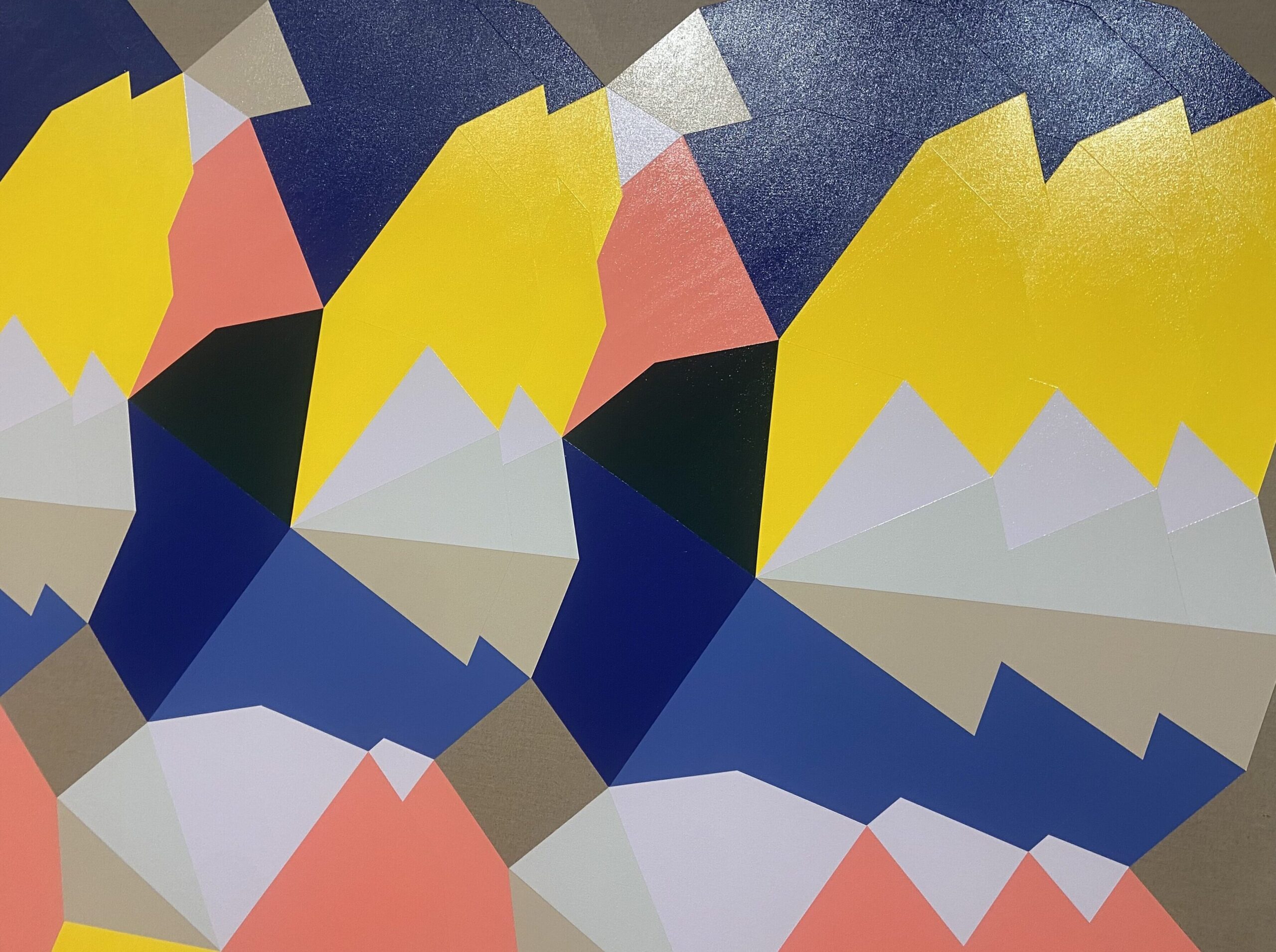
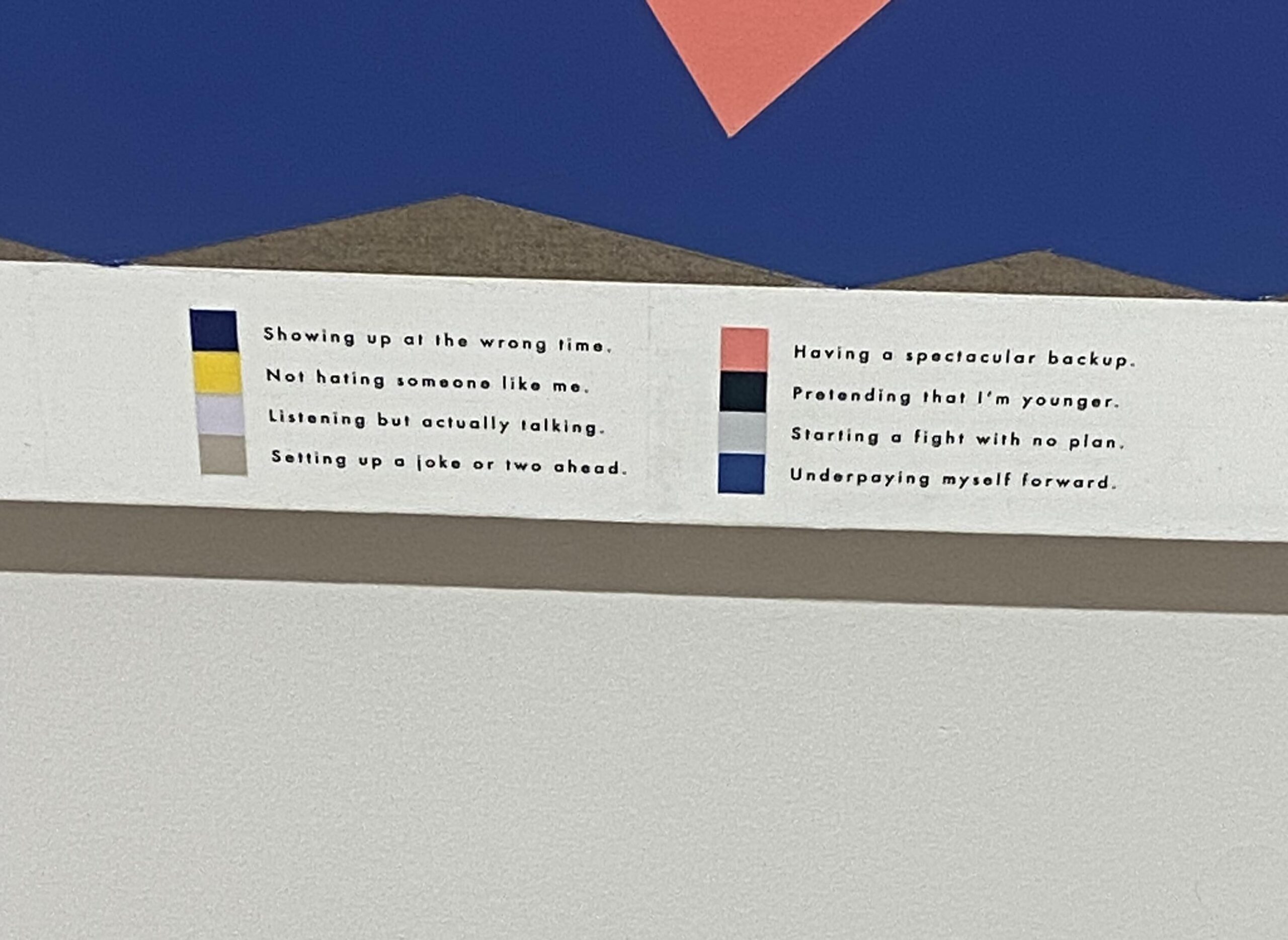
Kuo’s origin in writing started with fanzines and personal essays in the 90s. Palmer believes the writing seems to have helped people who do not engage with abstract paintings feel less bewildered when approaching the paintings.
Kuo wanted to help viewers “engage with abstraction.” He acknowledged that as a child of artists and a college student at Rhode Island School of Design, he came equipped with a language for abstract painting. However, through these chart paintings, he says, “I wanted to acknowledge the cost of entry and give viewers a key through words and feelings.”
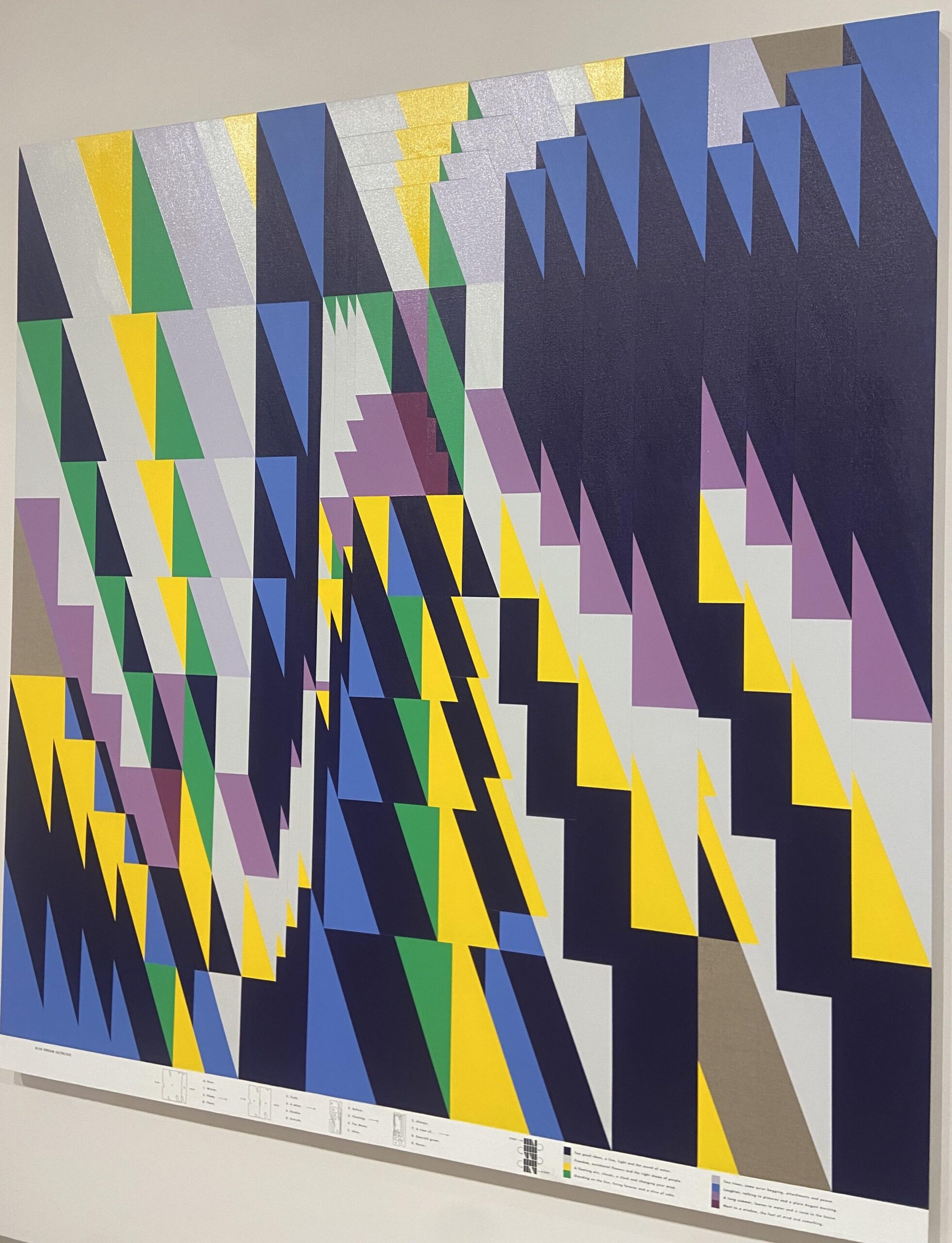
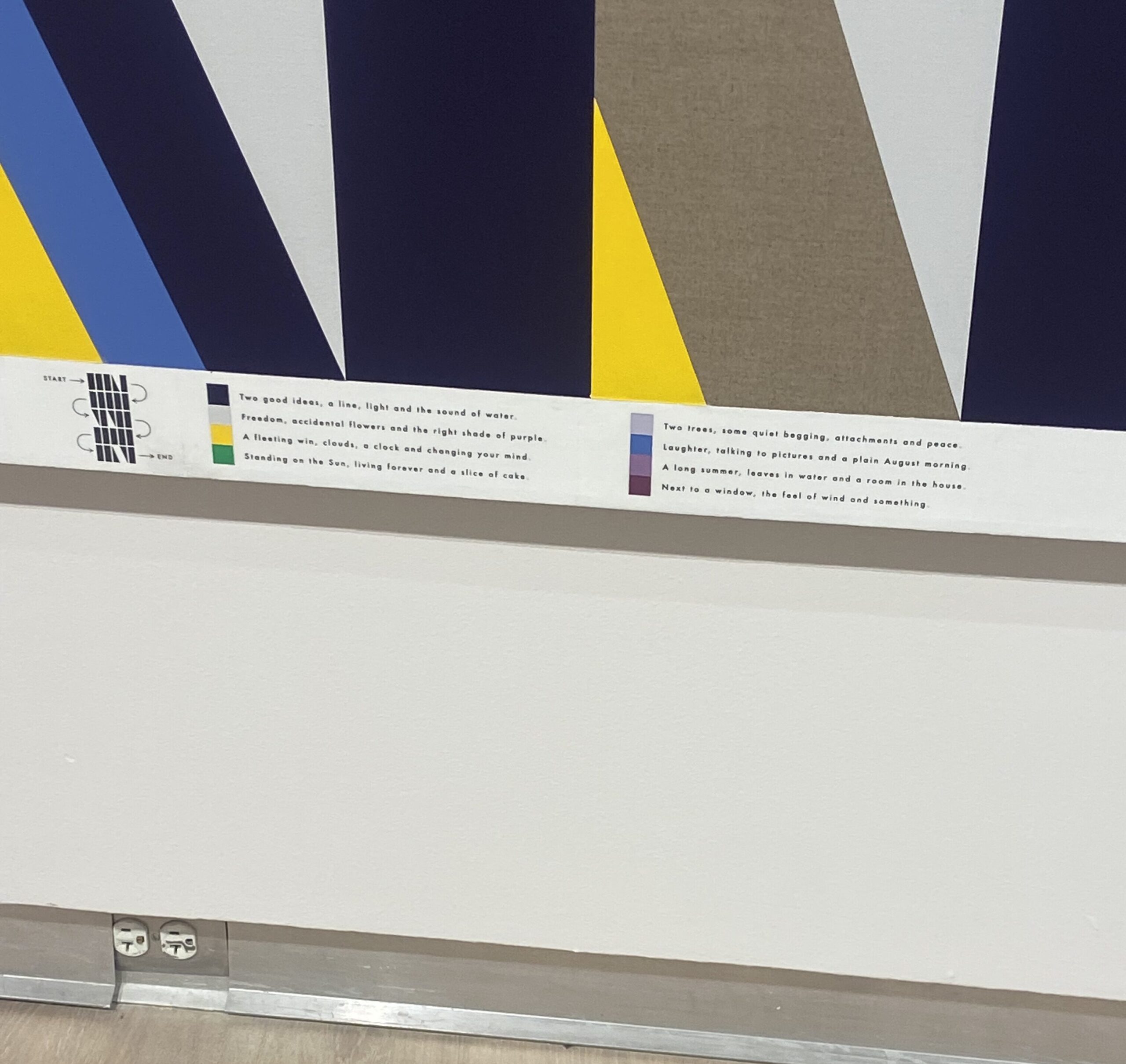
The framing of an abstract painting is scary and often hard for viewers to understand how to approach it. However, by writing out a key and explaining how each color relates to the other, viewers can feel comforted in their knowledge and interpret the piece as they see fit.
Kuo describes his next body of work, the Letterhead Paintings, as “such a relief to stumble upon.” These paintings came about in 2020 when he was trying to find some faraway environment, unlike his own home. He looked all around New York City and settled on flowers outside his local bodega. He then started painting these flowers (and other beautiful things) on letters and sending them to friends. What emerged was something much bigger, an abstract painting with a letterhead at the top, somewhat describing what the viewers saw, but leaving much more up to interpretation.
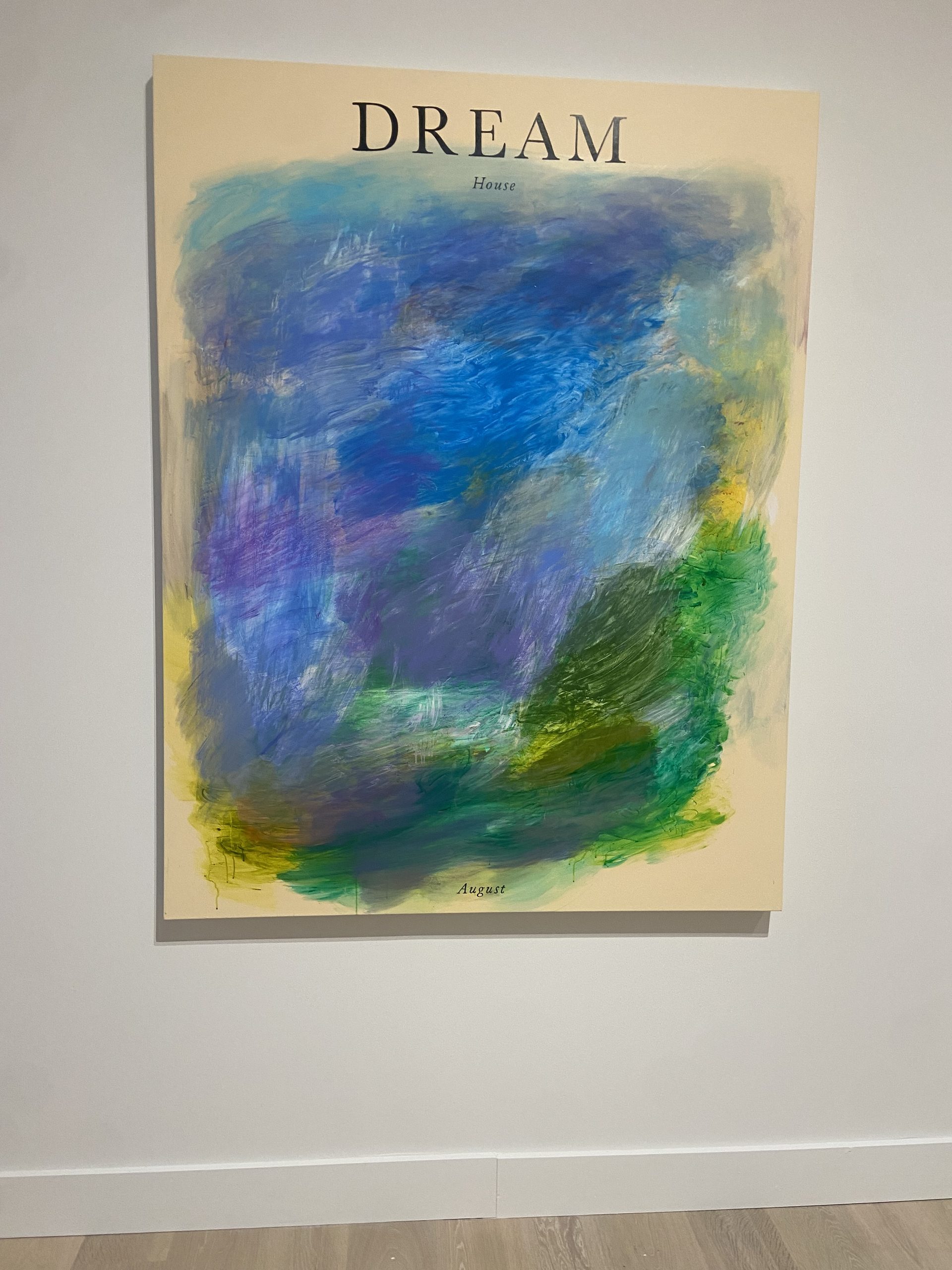
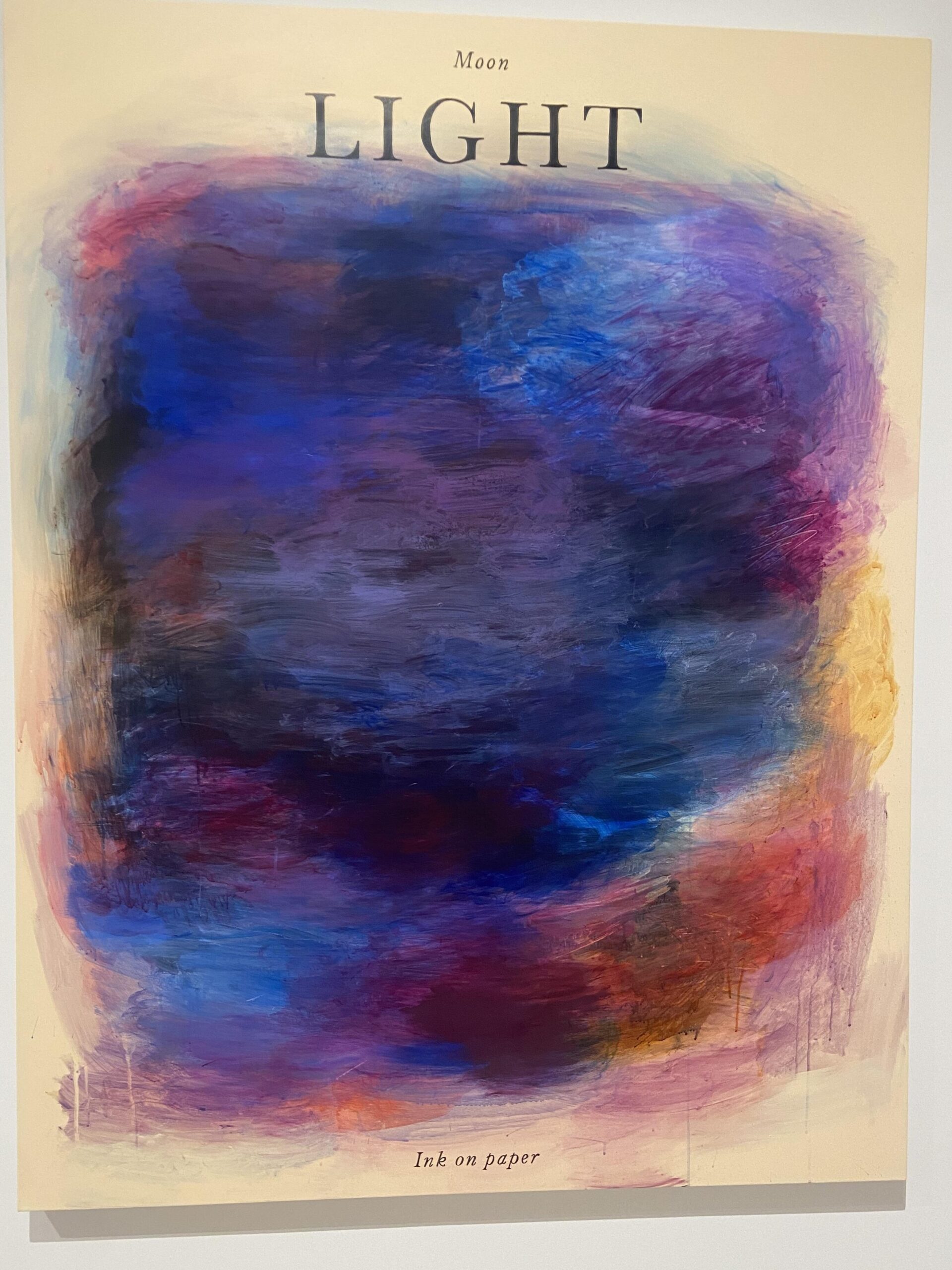
He describes these paintings as an “emotional outpouring,” telling Palmer and the audience about the poetic aspect of the letterheads. He says, “It comes from the openness to explore ‘content’ that isn’t saying this means this.” He extends this thought with a rather poetic metaphor of his own, “These works are islands, everything that happens in that ecosystem is something you make up.” He then uncrosses his legs and nods to us, “It f**** me up, yeah.”
Kuo creates a natural rapport with the audience and Palmer as he talks about his exhibit. They go back and forth on the title of the piece “Attachments,” Kuo looking down and telling Palmer, “I wonder if your first working title was better.”
The audience laughs at Kuo, his sincerity and joy mixing to create a charming presence on the stage. Palmer disagrees with him, saying, “It all ties together well; the blurry letterheads and charts are all attachments.”
Palmer then welcomes Freeman, who asks Kuo about art school and how it felt when he left. Kuo describes his childhood growing up with a mother who was an art critic. He was given the language to understand art and the confidence to do it himself. His time at art school was the best years of his life; he had the opportunity to collaborate with others and stay up until 3 a.m. just talking about paintings. Kuo says, “I left with the feeling that I’m the best painter alive. You should all think that in your twenties.”
They discuss the art scene in New York City, talking about art as a practice, something you must practice creating again and again. Kuo tells us that after moving back to New York, he thought he’d make twelve paintings and that would be that. But he wound up feeling stuck and having to not only practice, but to remind himself what he found beautiful and create just that on the canvas.
“But, of course,” Kuo says, “I believe in you guys as walking, talking, pieces of art too.” He leaves the audience with core pieces of advice, telling artists to move to New York, to say yes more, to figure things out as they go, and to keep their curiosity.
Kuo reminds the audience that youth is a powerful thing; creating attachments begins when you let yourself be young. He describes his own loss of youth and the need to create despite it, saying his next step is writing a book and finding peace. But his paintings will be a constant in his life. The talk ends with him telling the audience about the importance of finding their people.
He says, “80% of your process is the people sitting around you. You cannot create in a vacuum, a collaborator cannot even know you’re tethered to them, but you have to know you’ll always be collaborating with something or someone.”

Alexa is a junior majoring in Writing and hopes to pursue a career in publishing. Outside of writing for District, she can be found writing almost anything, reading in the park, or performing at an open mic!
