

Written by Emma Morris. Photos by Emma Morris.
A few weeks ago, I began a Registrar and Collections Management internship at the Savannah African Art Museum. When I tell people this, the main response I receive is something along the lines of “Oh cool! I’ve been meaning to go there!”
Of course, I’m elated that people find my studies interesting, but I also wonder why they aren’t actually making the trip. I’m no better—my first time in the museum was for my interview. I’ve realized many people may have no idea what goes on at the museum or may feel daunted by the vastness of African art, so I wanted to demystify the Savannah African Art Museum and encourage locals and students to finally make the visit they’ve been putting off.
The museum is a non-profit with four employees—a small institution with a lot of heart to make up for it. The collection includes more than 3,000 pieces from more than two-thirds of the continent. Tours at the SAAM are completely free and run every 30 minutes. The tours are divided into West Africa and Central Africa so as to not overwhelm visitors with 1,000 artworks in a single tour.
There is a wide variety of work, including but not limited to ceremonial masks, statues of kings, thrones, shrines, maternity figures, and offering vessels; I could go on. Africa is extremely diverse, with over 3,000 ethnic groups, the SAAM highlights only a small portion of African culture. Each tour aims to introduce visitors to African culture and tradition, hopefully leaving them curious to learn more.

The museum has over 12 galleries, each with its own focus. The Nigeria Gallery showcases a variety of artworks from different ethnic groups across Nigeria, highlighting the country’s cultural diversity, as it has over 250 ethnic groups.
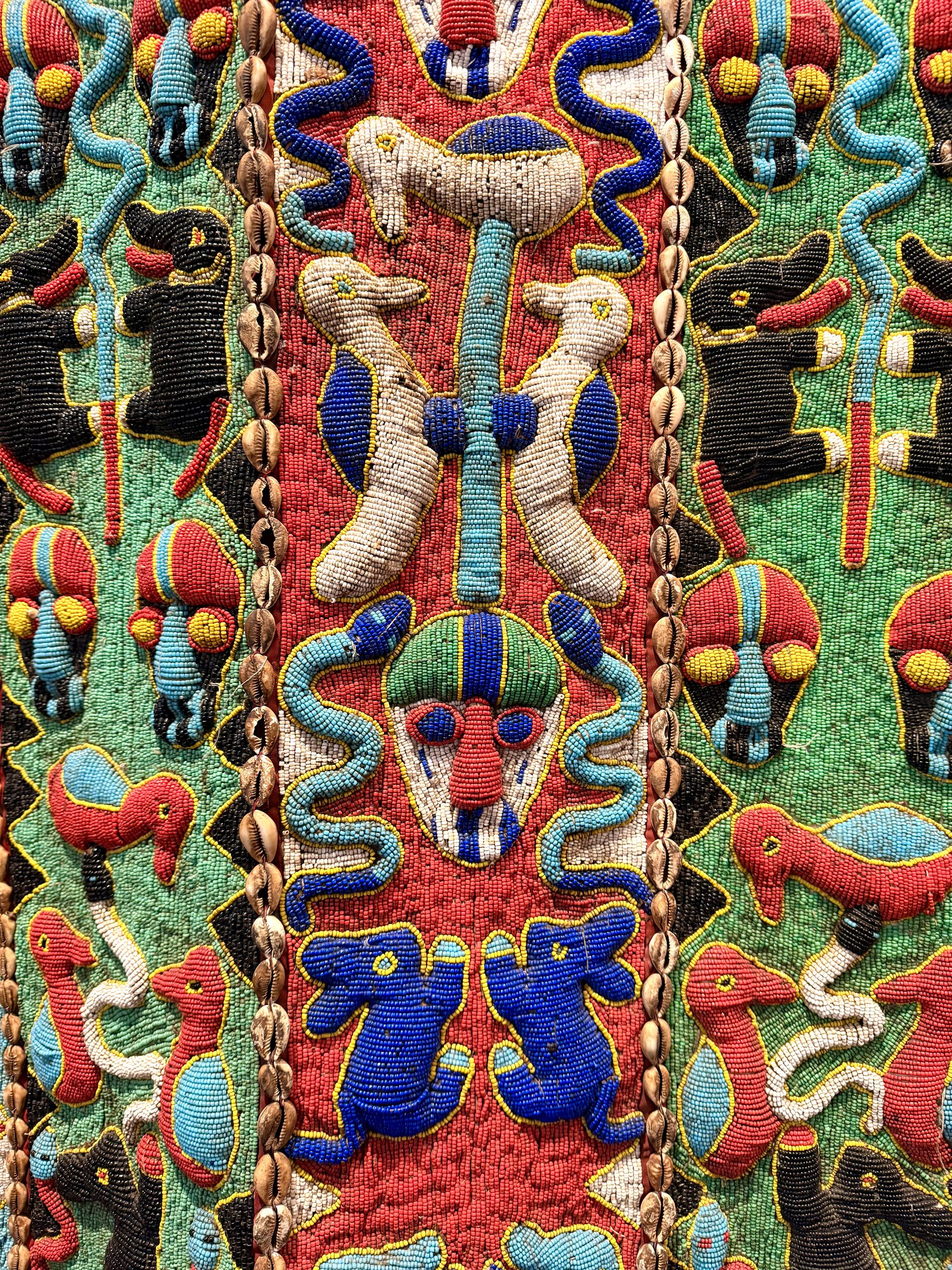
This gallery is my personal favorite as it is the most colorful gallery in the museum, displaying a wide range of materials such as textiles, woodwork, and beadwork. One of my favorite pieces at the museum is the “Shango Babalowo Tunic,” which demonstrates master craftsmanship in composition and beadwork.
The bronze gallery, as its name suggests, highlights all bronze works made with the lost-wax casting method. Featuring a single material in one space highlights different regional styles and the hand of each artisan. This gallery also discusses key colonial events in African history, providing context for the provenance and historical importance of African art that lies in museums around the world. Each piece is carefully crafted and rich with beautiful details that showcase the pinnacle of African metalworking.
Although Africa is the most diverse and second-most populated continent, it remains one of the most underrepresented regions in art history. African art history is more than just inspiration for European painters; it’s centuries of tradition and culture. The SAAM aims to educate the community about the power and importance of African art, so come spend an hour of your time learning something new!
