

Written by Emma Morris. Photos by Emma Morris.
For the first time in history, Michelangelo has come to Savannah. Telfair Museums opened “Michelangelo’s Women: Images of Female Power and Divinity from the Casa Buonarroti” at the Jepson Center on October 9th, displaying a range of media from the Italian master’s body of work. The exhibition focuses on depictions of women from the Casa Buonarroti in Florence, Italy—not only on Michelangelo’s own art, but also works by his contemporaries and works related to his descendants.

At the exhibition opening, Renaissance scholar Gary Radke highlighted several pieces, dissecting Michelangelo’s poems of affection and examining early sketches for his masterpieces. One interesting detail Radke gave in his lecture was that one work was still in the original frame Michelangelo’s family used. In today’s exhibition, we view a bronze cast of Michelangelo’s marble relief Madonna and the Stairs exactly as it was viewed 470 years ago.
This leads to the main takeaway from the exhibit: although Michelangelo spoke a different language and lived in a completely different world from ours, his artwork transcends time and culture. Savannahians and tourists alike enjoy art at the Jepson Center that was created across an ocean nearly half a millennium ago.

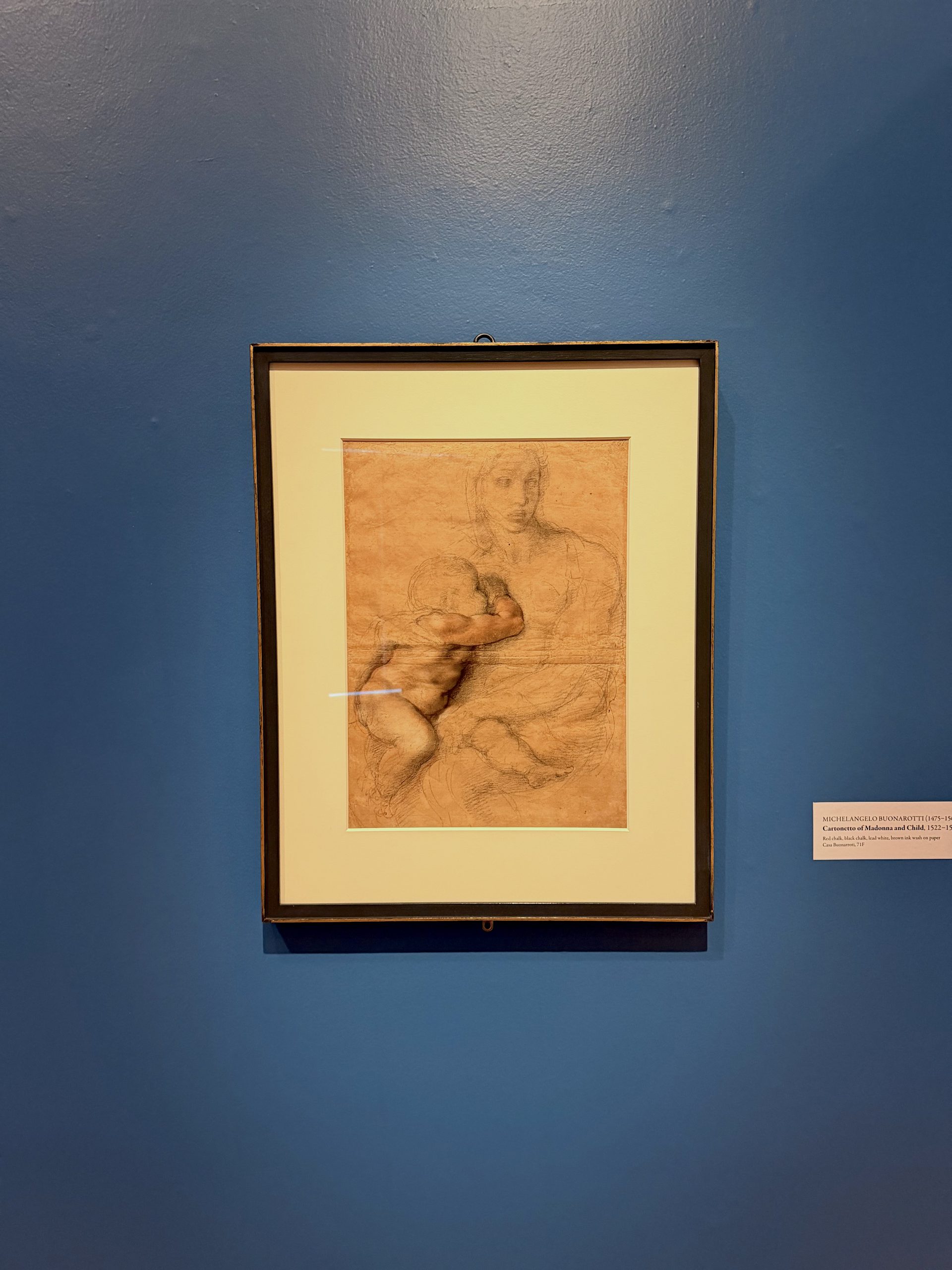
Another interesting point Radke made about Michelangelo’s work was his obvious appreciation not only for the female form, but for women as a whole. In one of his preliminary sketches of the Madonna and Child, he depicts Mary holding a partially pigmented baby Jesus. Although just a sketch, Michelangelo poured immense thought into Mary’s positioning and expression. It is said that she originally looked down at her son, but Michelangelo later shifted her gaze to the side, signaling her fear for her son’s fate. This attention to detail appears throughout the exhibit, whether in a simple sketch or a finished product.
Whether you’re interested in the Renaissance or not, don’t miss the chance to see this exhibition with your own eyes. The pieces in the exhibit speak for themselves; the mastery and talent are exquisite. There is a reason the name “Michelangelo” turns heads at the mere mention of it—see his prowess for yourself and go visit “Michelangelo’s Women,” on view now until Jan. 24
